
The Carers Who Never Get a Break
Colette cares for her uncle full time, juggling calls, appointments, and daily care.
Like most carers, she has no legal right to time off, leaving her exhausted and overwhelmed.
Colette collects herself on the worn sofa, cushions sinking beneath her. Her phone is still warm from hours of calls to agency after agency. “Respite literally happens here now,” she says, pointing to the sofa. “Which is sad, really.”
Respite would allow Colette to take a break from her caring responsibilities while her uncle is looked after by someone else, whether through short-term support or other services that give her time to rest and recharge. For Colette, however, a break is something she has had to find within her own home, on the sofa, while the caring continues.
Cooking, cleaning, managing medications, the checklist never ends. A call to the bank drags on for more than an hour. “You’re constantly repeating why you’re on the phone, what you need, what questions they have,” she says.
The repetition doesn’t stop when she puts the phone down. At home, it can be as simple as Colette asking her uncle if he has eaten his dinner, taken his medication or had enough to drink. For Colette, already exhausted, the repetition can be frustrating, especially when the last thing she wants is to become angry with him. But telling someone with memory difficulties, “you’ve already told me that,” can upset them and draw attention to something they may already be struggling with.
Since Covid-19, Colette has cared for her 96-year-old uncle, a former Franciscan Friar with Alzheimer’s, cancer, and heart failure. “I didn’t even think about it,” she says. “I loved him, and he needed looking after.”
Full-time caring means meeting his needs: “stimulating his mind, washing his clothes, keeping him clean, feeding him, dealing with his frustrations,” or simply “listening endlessly to his repetitiveness.” Playing games is one way Colette helps keep his mind active, with Connect Four a particular favourite. They also play games together, giving them time to connect beyond the routines of care. Being a carer, she says, is being “their whole support network, emotional and physical all rolled into one.”
Colette helps her uncle with his morning exercise routine.
Colette helps her uncle with his morning exercise routine.
By 2 PM she has been up since early morning, moving between her uncle’s room, the kitchen and the sofa. She answers calls on speakerphone while sorting tablets, cooks while the breakfast dishes pile up, and catches only a few minutes rest before the next interruption.
A handwritten note in her uncle’s room reminds him who Colette is and that he has Alzheimer’s.
A handwritten note in her uncle’s room reminds him who Colette is and that he has Alzheimer’s.
A Hidden Crisis
Like Colette, millions of unpaid carers across the UK are reaching breaking point. The exhaustion, anxiety and relentlessness of being needed every hour of every day slowly wear them down. Respite care, the lifeline that allows carers to rest and reclaim part of their own lives, is shrinking fast. Many services closed during the pandemic and did not fully reopen, leaving carers without vital support, even as demand has surged.
In 2020, Carers UK’s Caring Behind Closed Doors: Six Months On report found that 38% of carers were providing more care because local services had been reduced or closed. Between 2019–20 and 2020–21 in England, the percentage of carers receiving respite or similar support for the person they cared for fell from 12.2% to 8.5% during the first year of the pandemic.
Katy Styles, a full-time unpaid carer and founder of the campaign group We Care, draws on both her personal experience and campaigning work when discussing the decline in respite. She says respite for unpaid carers has decreased not only because of closures, but also because of “financial cutbacks and a lack of trained staff,” alongside a focus on other areas, which has led to respite being cut. She points out that many carers managed without support during Covid and are now struggling to regain what they lost, while still lacking proper services.
Unpaid care across the UK is now estimated to be worth £184.3 billion each year, almost equivalent to the combined NHS budget across the four nations. But this vital contribution has a steep personal cost.
Exhaustion
Before caring for her uncle, Colette led a fast-paced life, running multiple catering businesses and thriving on challenges it posed. “It was busy and chaotic,” she recalls. “I miss the mental stimulation, the people.” Surrounded by colleagues who listened and understood, her world was full of connection and meaning.
Then came Covid-19, Colette was already supporting her uncle part-time, but when the virus hit, she couldn’t bear to risk catching it.
Styles notes that whilst the number of carers hasn’t increased dramatically, the intensity has. The 2021 Census recorded around 5 million unpaid carers in England and Wales. Of these, 1.5 million provided 50 or more hours of care a week. ONS records 50+ hours as its highest category, meaning the figures do not show how many people are providing care beyond that, including those caring around the clock. “ONS only measures up to 50+ hours,” Styles explains, “but many carers are providing care 24/7, managing multiple conditions and often end-of-life care at home
The emotional load is just as heavy, a maze of doctors’ appointments and conversations she cannot share. “I don’t tell him because he won’t understand… If I do, he’ll worry, then forget. And if I don’t, he’ll worry about something else, and then forget what he was worrying about.”
For carers like Colette, support may need to extend beyond respite alone. Access to counselling, financial advice, peer networks and practical support could help carers better manage the emotional and practical pressures of caring. A break from their caring role may provide temporary relief, but it doesn’t remove the responsibilities waiting for them when they return home.
Colette lives with fibromyalgia and kidney disease, alongside the demands of caring. Constant fatigue means that sometimes even walking across the room feels painful. By mid-afternoon, she has already been awake since the early hours, with many hours slipping by in a blur of cooking, cleaning, managing medication and answering phone calls. She might catch a brief nap on the sofa, but it’s quickly interrupted by a new notification or message. For Colette, moments of silence, peace and quiet are few and far between.
Breaking Point
According to the State of Caring Survey 2025, over 65% of carers say they feel overwhelmed, chiefly because they cannot take a break.
After months of trying to manage alone, Colette finally sought external support. But navigating the care system brought new complications. Exhausted and near burnout, she accepted help from an outside care agency, only for things to quickly spiral.
She reached breaking point when one company labelled her “dangerous” and, she says, entered her home without permission. On another occasion, a social worker entered while she was out, then blindsided her with multiple questions about alleged mistakes. Both incidents left Colette feeling unsafe, vulnerable and exposed.
Colette’s experience reflects what Styles describes as a wider “perfect storm” facing carers across the UK. “There are more carers with physical disabilities, carers on waiting lists for surgery, and carers whose health and wellbeing is already lower than the general population. They’re expected to keep caring when their own bodies are giving out,” she explains.
The risks are severe. Research by Dr Siobhan O’Dwyer at the University of Birmingham found that 41% of parent carers had experienced suicidal thoughts while caring for their disabled or seriously ill child, while 2.5% had attempted suicide. O’Dwyer has highlighted the severity of these experiences by comparing the psychological impact on parent carers with that seen among other groups exposed to extreme stress, including combat. However, there is currently no routinely collected data showing how many unpaid carers die by suicide.
The Price of Care
Carer’s Allowance stands at just £86.45 a week for 35+ hours of care and is often reduced by other benefit deductions. Colette doesn’t claim it: “It would make little difference,” she says. Technically, she could apply, but doing so could affect the benefits her uncle receives, meaning there would be little financial gain for the household.
Respite, when it happens, is expensive. “Getting someone to look after him for a week so I could stay here would cost two and a half grand.”
NHS guidance says the cost of respite care can vary considerably, depending on the type of support required. Live-in and 24-hour care can cost thousands of pounds a week. Colette was quoted more than £2,500 for round-the-clock care at home, more than her monthly income.
However, Styles warns that the state is failing to acknowledge the real cost of carers not getting breaks. “It costs far more to replace a carer after they reach breaking point than to fund a weekly or annual break in the first place,” she explains. Families are increasingly stretched across multiple caring roles and responsibilities, with single-parent carers facing particularly intense pressures.
Lifeline: Amy Steps In
Recently, Colette began receiving ten hours of respite each week from Amy, a paid carer. Though limited, it’s a lifeline.
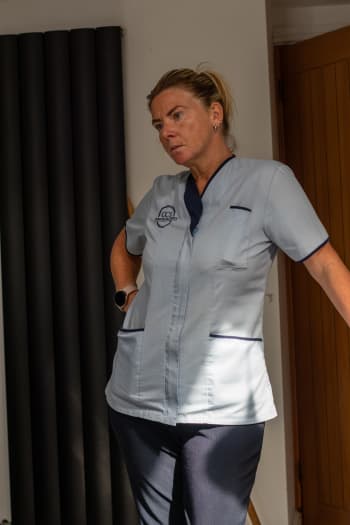
Amy cooks, cleans and plays games with her uncle. “She might do a crossword, a jigsaw puzzle, sit and watch telly with him, even react to his stories.” For Amy, it is about finding things he enjoys and sharing them.
Those hours give Colette the needed breathing space to shop, meet friends, or simply be.
Carers UK’s State of Caring 2024 survey found that 57% of carers responding said they felt overwhelmed “often” or “always”, while 65% said they felt overwhelmed because they had been unable to take time away from their caring role.
Carers UK’s State of Caring 2024 survey found that 57% of carers responding said they felt overwhelmed “often” or “always”, while 65% said they felt overwhelmed because they had been unable to take time away from their caring role.
But she dreams of more: “At least one week a year of fully funded in-home care. Respite is peace of mind,” she explains, rest without worry, without wondering how he'll be when she returns. "I feel I am a normal human being,” she says.
Steps Towards Change
Carer support varies across the UK, with some regions offering more comprehensive and guaranteed respite services, while others rely on limited, means-tested support. This creates uneven access to vital breaks for Carers.
Wales: In 2025/26, the Welsh Government committed £5.25 million to support unpaid carers through its Short Breaks Scheme and Carers Support Fund. The Short Breaks Scheme funds holidays, activity days, leisure activities and time for hobbies, while the Carers Support Fund provides financial help to carers on low incomes. The Short Breaks Scheme aims to support more than 45,000 carers by 2026. The schemes have since been extended to 2029, with a further £15.75 million committed over three years.
Scotland: The Carers (Scotland) Act 2016 gives adult and young carers the right to a personalised Adult Carer Support Plan or Young Carer Statement, identifying their needs and the support available to them. The plan must consider whether support should include a break from caring. Carers can also apply to the Time to Live Fund for flexible short breaks.
England: By contrast, access to council-funded respite depends on assessments and whether a carer or the person they care for is assessed as having eligible needs. Where support is chargeable, a financial assessment may also be required, while the availability of services varies between local authorities.
Styles argues that nowhere in the UK has respite "right." Even when money exists, staff shortages and cancellations mean planned breaks can fall through. "What carers need is guaranteed breaks," she says, a right campaigners are pushing through the Carers Trust's "Give Us a Break" Petition.
Taking a Break
Attending the local Pride event gave Colette a rare chance to unwind and momentarily step back from her caring responsibilities. Without a friend stepping in to look after her uncle, it wouldn’t have been possible.
For a few precious hours, she felt like herself again, chatting, laughing, and reconnecting with long-time friends. Instead of clock-watching or worrying about what was happening at home, she could finally relax, knowing he was safe.

A Future that's Hard to Imagine
For now, Colette’s sofa isn’t a place of rest, but a last refuge in a life consumed by care.
Across the UK, millions of unpaid carers find their own health and well-being hanging in the balance, sacrificed to hold up an overstretched health and social care system. They exist in the background, silent, unseen, amid policy delays, shrinking services, and broken promises, giving up sleep, income, identity, and peace of mind.
“I’m worried about him. I can’t think about the future,” Colette says. “He’s still alive; he’d be dead now if it wasn’t for my care."
Colette, 55, with her Uncle.
Colette, 55, with her Uncle.
How can carers like Colette keep going when they are holding on to so little? Respite is not a luxury; it’s a necessity for carers on the verge of breaking down. Yet in England, the right to respite remains uncertain, unequal, and out of reach for many. The question lingers: how can carers like Colette keep going when they are holding on to so little?
Each night, her uncle quietly repeats the same words before drifting to sleep: “What would I do without you, little one?” For Colette, it’s comfort and burden at once, an expression of love as well as the immense weight of dependence and responsibility.
If you're a carer and need support
If you’ve been affected by the experiences shared in this story, help is available. Whether you need emotional support, financial advice, or simply someone to talk to, the following organisations may be able to help:
- Carers UK – Offers expert advice, a helpline, and online support forums.
www.carersuk.org | Helpline: 0808 808 7777 (Mon–Fri, 9am–6pm) - Carers Trust – Provides local support services and grants for unpaid carers.
www.carers.org - Mind – For mental health support, including for carers managing stress or anxiety.
www.mind.org.uk | Infoline: 0300 123 3393 - The Mix – For young carers under 25 needing support.
www.themix.org.uk | Text: THEMIX to 85258 - Citizens Advice – For help navigating benefits like Carer’s Allowance, PIP, or Universal Credit.
www.citizensadvice.org.uk
 Built with Shorthand